A bathroom is a challenging environment for any building material. It has constant exposure to water, humidity, and steam. This means your tile choice must prioritize technical performance over pure aesthetics.
Non-Negotiable Features for Bathroom Tiles
Before considering style or colour, you must ensure your chosen tile can perform correctly in a wet environment. Certain technical features are not optional for a safe and long-lasting bathroom.
Water Resistance and Porosity
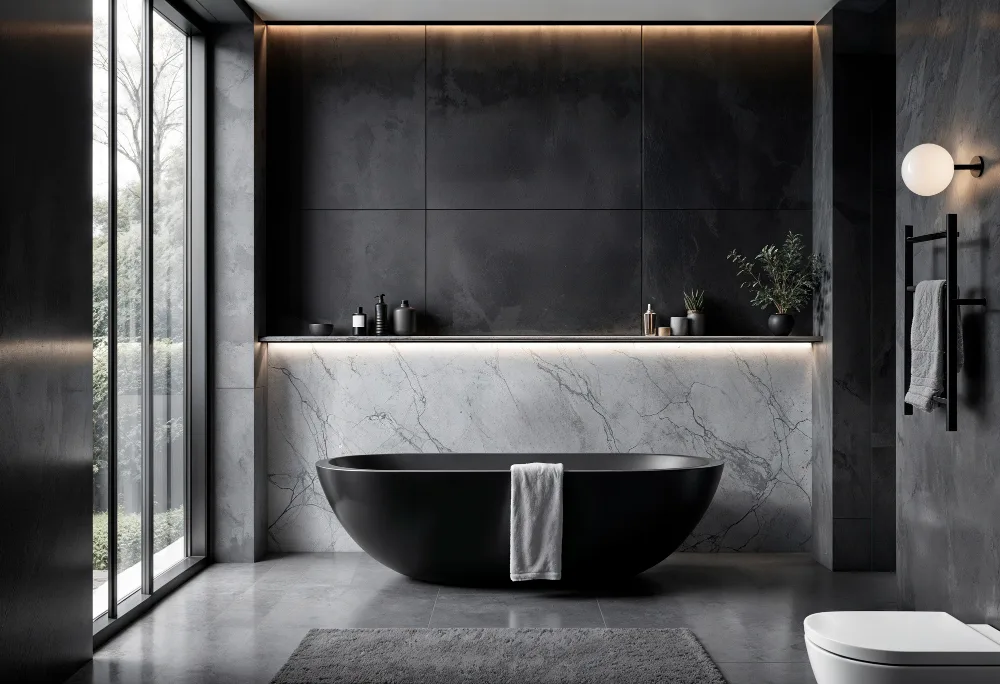
Porosity refers to how much moisture a tile can absorb. In a bathroom, a tile with high porosity can lead to water damage over time.
- Porcelain tiles have a very low water absorption rate (below 0.5%). This makes them the best choice for bathroom floors and inside shower areas.
- Glazed ceramic tiles are suitable for walls outside of direct water spray. While the glaze is waterproof, the tile body itself is more porous than porcelain.
Slip Resistance for Floors
Wet floors create a serious slip hazard. Your bathroom floor tiles must provide a safe, non-slip surface. Avoid using glossy or polished tiles on the floor. Instead, look for tiles with specific finishes that offer better grip.
- Matte or textured finishes provide the necessary friction to prevent falls.
- Many tiles have a formal slip resistance rating (DCOF). A higher rating means better performance in wet conditions.
The Role of Tile Size and Grout
The size of your tile affects both safety and maintenance. There is a practical trade-off to consider.
- Small mosaic tiles on a shower floor increase the number of grout lines. These lines act as channels for water and provide extra grip underfoot.
- Large format tiles on walls or the main floor reduce the number of grout lines. This creates a cleaner look and means there is less grout to scrub clean.
Choosing the Right Tile for Each Area of the Bathroom
A bathroom is not a single space. It has different zones with different requirements. The tile that works for a wall may not be suitable for a shower floor. Here is how to select the right tile for each specific area.
For the Shower Floor
This area demands maximum safety and water resistance. The tile is constantly wet, so grip is the number one priority.
- Recommendation: Use textured porcelain mosaics or small-format porcelain tiles. The small size and numerous grout lines provide excellent slip resistance where you need it most.
For the Shower Walls
The main priorities for shower walls are waterproofing and ease of cleaning. You want a smooth, non-porous surface that is simple to wipe down.
- Recommendation: Large-format porcelain tiles are an ideal choice. The larger size means fewer grout lines, which reduces the potential for mould growth and makes cleaning much easier. Glazed ceramic is also a suitable option.
For the Main Bathroom Floor
The floor outside the shower still gets wet from splashes and humidity. It needs to be durable and safe to walk on.
- Recommendation: A matte or textured porcelain tile is the safest and most durable option. It provides good slip resistance and stands up well to foot traffic and cleaning.
For Bathroom Walls (Dry Areas)
The walls outside the direct shower spray have fewer technical demands. This is where you have the most design freedom.
- Recommendation: Glazed ceramic tiles are a perfectly good and cost-effective choice for these walls. You can focus more on colour and style in these areas without compromising on safety or function.
Bathroom Design Strategies Using Tiles
Once you understand the technical requirements, you can focus on how your tile choices affect the room's look and feel. The right tiles can solve common design problems and help you create the space you want.
Making a Small Bathroom Feel Larger
Many homes have small bathrooms. Your tile selection can create an illusion of space.
- Use large-format tiles on both the floor and walls. Fewer grout lines create a less cluttered, more expansive look.
- Choose light and neutral colours like white, beige, or light grey. These colours reflect more light, making the room feel brighter and more open.
- Continue the floor tile partway up one wall. This design trick draws the eye upward and makes the floor plan seem larger.
Creating a Luxury, Spa-Like Feel
You can create a calm, high-end atmosphere using tiles that mimic natural materials. This approach adds warmth and elegance.
- Stone-look porcelain offers the beauty of marble or travertine without the high maintenance.
- Wood-look porcelain on the floor can make a bathroom feel warmer and more inviting than traditional tile.
- Stick to a consistent and simple colour palette to create a calming, unified space.
Ensuring Timeless Appeal
Bathroom renovations are a significant investment. Choosing a classic design ensures you will not have to update it in just a few years.
- Simple white subway tiles, neutral-coloured large-format tiles, and classic marble-look porcelain are safe choices that do not go out of style.
Conclusion & Next Steps
A successful bathroom project starts with choosing the right tiles for each specific area. The key is to balance the technical needs of a wet environment with a design that works for your home.
Prioritize safety and water resistance for floors and shower areas, and you will build a space that is both beautiful and long-lasting.
Now that you understand the functional needs of your bathroom, you can explore our collections with confidence.
See our recommended Non-Slip Floor Tiles and our durable Waterproof Wall Tiles to find the right fit for your project.
If you have questions about a specific product's suitability for your bathroom, our team is ready to help.
Use Arrow Up and Arrow Down to select a turn, Enter to jump to it, and Escape to return to the chat.